

If you work in sustainability leadership or serve on your organization’s ESG committee, you know the challenge: institutional investors, corporate customers, and auditors increasingly expect environmental data that is measurable, verifiable, and supported by established methodologies.
A major area of attention is Scope 3 emissions, which cover activities across an organization’s upstream and downstream value chain. Responsible IT hardware management provides a measurable way to document progress in circularity and reductions in the environmental footprint associated with technology assets.
A significant share of a corporate technology device’s carbon footprint, whether it is a laptop, monitor, or server, is generated during raw material extraction and manufacturing, long before the user turns the device on for the first time.
Every additional period of useful life gained through refurbishment can reduce the need for new manufacturing. The same applies to the recovery of materials such as gold, silver, palladium, copper, and rare earth elements through formal recycling processes.
To incorporate e-waste management into reporting frameworks such as GRI (Global Reporting Initiative), SASB, or CDP, consider tracking the following metrics:
eSmart Recycling provides corporate partners with environmental metrics following each collection. The documentation includes processed volumes, carbon savings calculations, and the final destination of materials, giving sustainability teams information they can use in annual sustainability and corporate governance reporting.
Including hardware circularity in your corporate sustainability strategy creates a stronger record of how technology assets are managed throughout their lifecycle. Tracking Scope 3-related emissions, material recovery, and equipment reuse gives sustainability teams measurable information to support ESG reporting and communicate progress to customers, investors, and other stakeholders.
Strengthen your ESG metrics this year: Contact us through our form to learn how to document the environmental contribution of your IT asset retirement program with supporting data.
Fill out the form below to request your electronics recycling pickup.
We’ll coordinate the schedule logistics and follow up with next steps.
If you lead IT infrastructure or systems, you eventually reach a familiar moment: a platform reaches the end of support, and the organization needs to move an entire computer fleet to newer systems with updated security requirements, such as TPM 2.0 and Secure Boot.
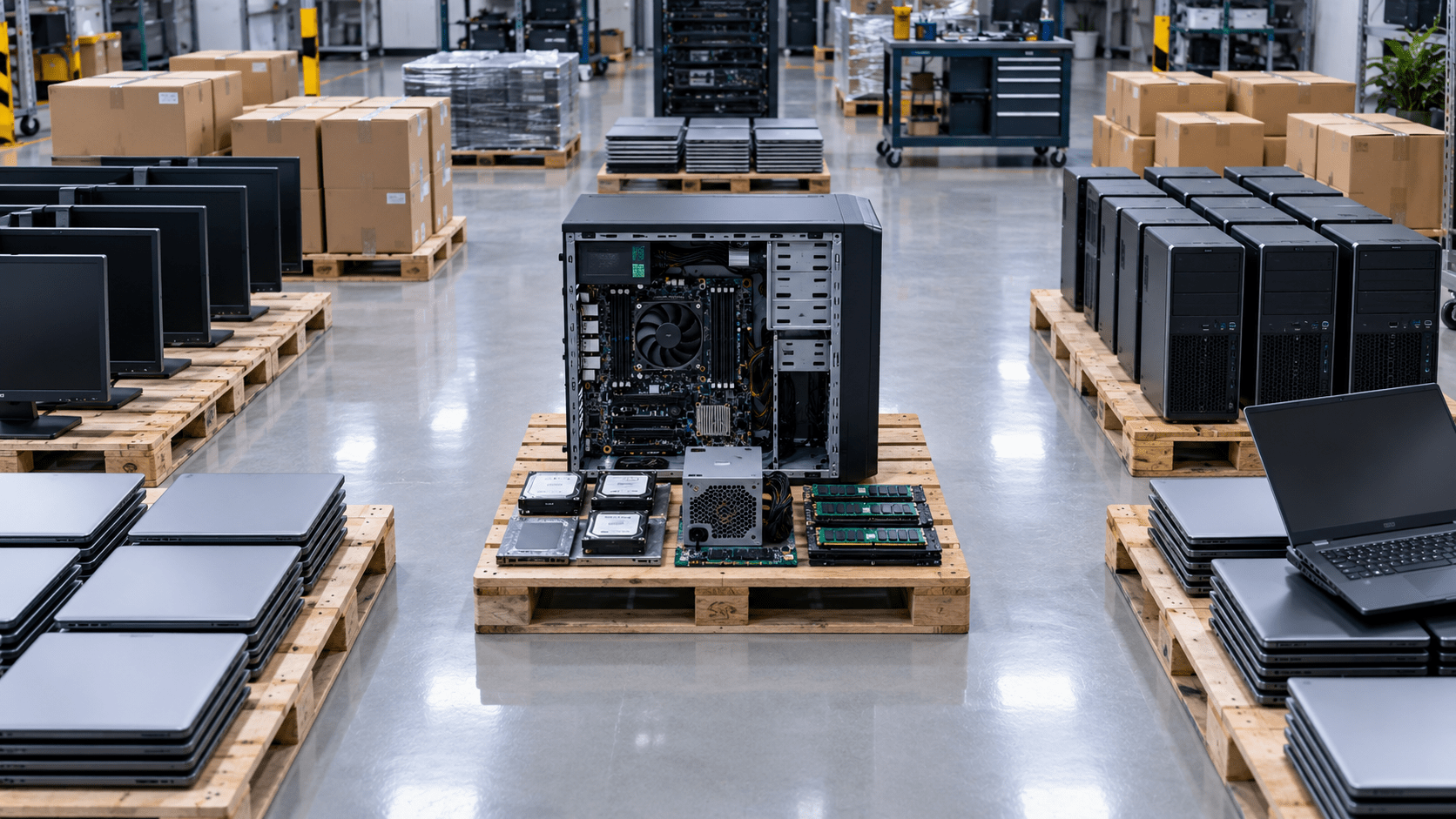
Deploying hundreds or thousands of new devices takes careful planning. At the same time, someone has to deal with the outgoing fleet: collecting replaced workstations, sanitizing their data, and recovering value from the hardware before its market value declines further.
A major hardware refresh across multiple offices or a hybrid workforce can create several problems at once:
Running the retirement process alongside the deployment of new equipment keeps both sides of the refresh moving together.
Start by sorting the current fleet according to age, specifications, and condition.
Devices that still have enough performance for everyday business tasks can be prepared for remarketing. Older or heavily worn equipment can be directed toward parts recovery or material recycling.
Plan equipment collection around the deployment of new devices.
An employee can return the previous computer as the replacement device is delivered and configured, keeping the retired asset under documented custody from the start.
Apply data sanitization procedures based on NIST 800-88 at a centralized processing facility.
When appropriate, cryptographic erasure can preserve the storage drive for continued use, allowing the device to retain more of its resale value.
Refurbished equipment can be directed toward institutional buyers and qualified distribution channels.
Recovered funds can then support licenses, peripherals, or other technology infrastructure needs.
A large fleet refresh becomes easier to manage when collection, packaging, processing, and disposition are coordinated as one operation.
eSmart Recycling coordinates high-volume collections for companies across Tampa Bay, Florida, and the Southeast, including on-site industrial packaging and streamlined disposition of replaced hardware.
A well-planned ITAD program keeps the hardware retirement process moving at the same time as the technology rollout.
The new devices arrive.
Employees transition to the updated systems.
The previous equipment is collected, documented, sanitized, and evaluated for its next destination.
That sequence helps protect corporate information, clear valuable workspace, and recover value from equipment while the organization moves forward with its technology refresh.
Planning a large-scale IT fleet refresh? Contact our team to discuss hardware collection, data sanitization, and disposition for your next migration.
There is a point in almost every security audit when the conversation moves away from policies and systems and gets very physical.
The auditor asks about the laptops that were retired last quarter. The servers that left the data center. The storage drives that were removed during a hardware refresh.
And then comes the question: Where is the record showing what happened to them?
Your team may have strong access controls, encryption policies, and cloud security procedures. But retired hardware still needs a clear paper trail. Who had it? Where did it go? How was the data removed? Was the device destroyed, refurbished, recycled, or resold?
That is where chain-of-custody documentation becomes especially important.
Security programs often revolve around digital systems, but physical assets still carry information long after they leave active service.
SOC 2 and ISO/IEC 27001 include controls related to physical access, asset management, and the secure handling and disposal of information and storage media.
For organizations preparing for an audit, that means having a documented process for retired equipment can make it much easier to show how information was protected throughout the asset’s lifecycle.
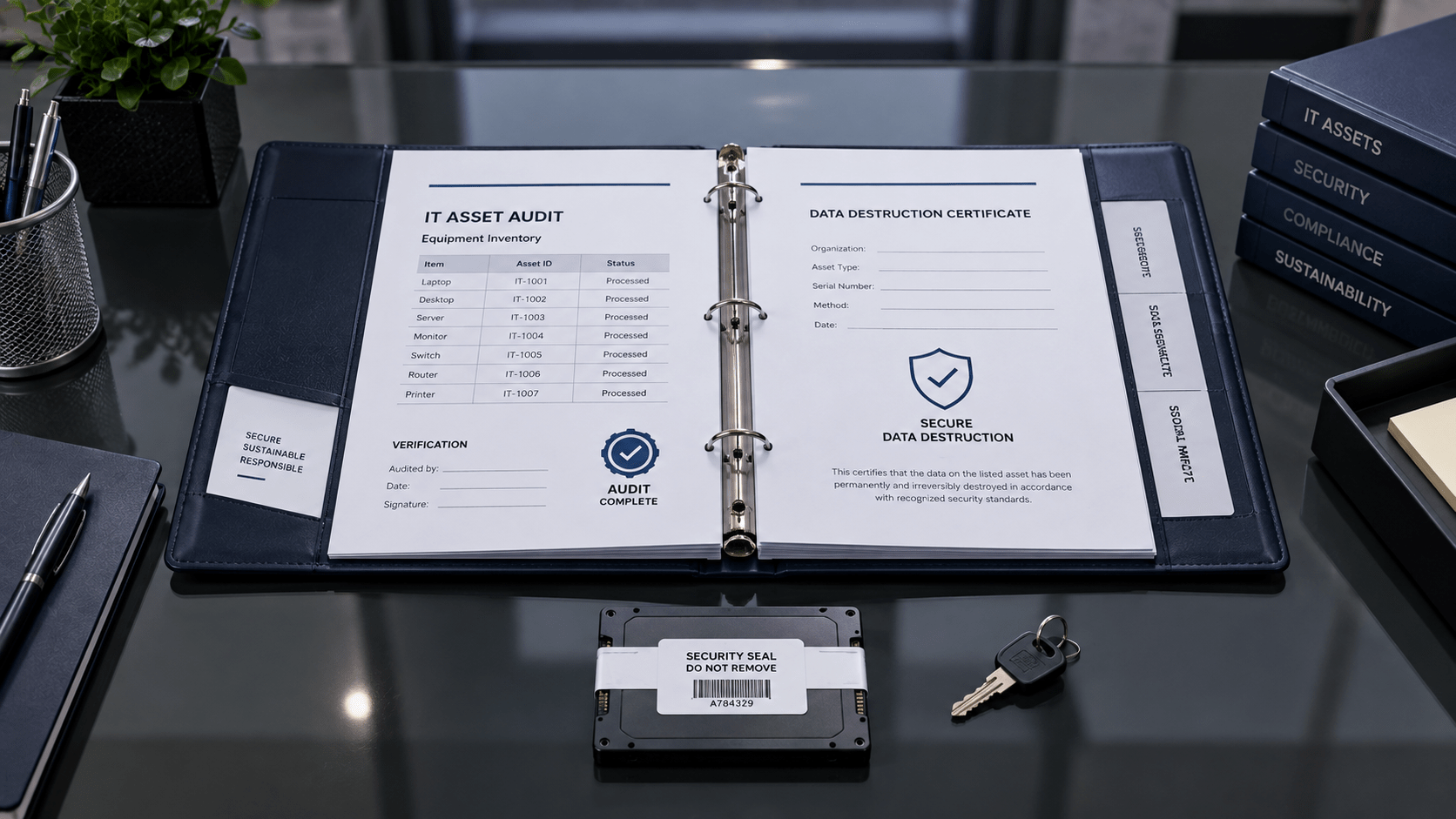
A good audit file should tell the story of each retired asset from beginning to end.
Your initial retirement inventory should match the final disposition records.
Serial numbers, MAC addresses, and asset tags give your team a simple way to connect the equipment that left your facility with what happened to it afterward.
If a laptop appears on the retirement list, you should be able to find that same laptop in the final disposition documentation.
Once equipment leaves your facility, the record should continue.
Pickup manifests, receiving records, transportation documentation, and tamper-evident seals can help establish who handled the equipment and when.
For security teams, this answers a basic but important question: what happened to the asset after it left our building?
A certificate of destruction or data sanitization should provide more than a date and an asset count.
Depending on the process used, documentation can identify the applicable sanitization standard, such as NIST 800-88 Rev. 1, and the method applied to the storage media.
That could include cryptographic erasure, logical erasure, or physical destruction.
The important part is having a record that connects the method to the specific assets processed.
Some organizations need another layer of documentation.
For highly sensitive equipment, video records of physical destruction and technician logs can provide additional evidence of what happened inside the processing facility.
These records can become particularly useful when an external auditor wants to verify the controls surrounding the destruction process.
Your auditor is ultimately reviewing your organization’s controls, but your ITAD provider becomes part of the evidence trail.
That makes vendor selection important.
Working with an R2v3-certified provider gives your security and compliance teams access to established procedures and documentation for handling retired electronics.
At eSmart Recycling, our Tampa Bay operations support corporate hardware retirement with asset tracking, data sanitization documentation, and records covering the final disposition of equipment.
That information can then become part of your organization’s vendor records and audit documentation.
Think of it as a simple story:
A laptop is retired.
Its serial number is recorded.
The equipment is collected and transported under documented custody.
The storage media is sanitized or physically destroyed according to the applicable procedure.
The final disposition is recorded.
The documentation stays with the asset record.
When an auditor asks what happened to that laptop months later, your team has an answer backed by records.
SOC 2 and ISO 27001 audits can bring plenty of attention to digital controls, but retired hardware deserves the same level of care.
A clear chain of custody, accurate asset reconciliation, documented sanitization, and certificates of destruction give your security and compliance teams something valuable during an audit: a record they can actually follow.
Preparing for a SOC 2 or ISO 27001 audit? Talk with our team about your hardware retirement process and the documentation your organization can keep for future audits.
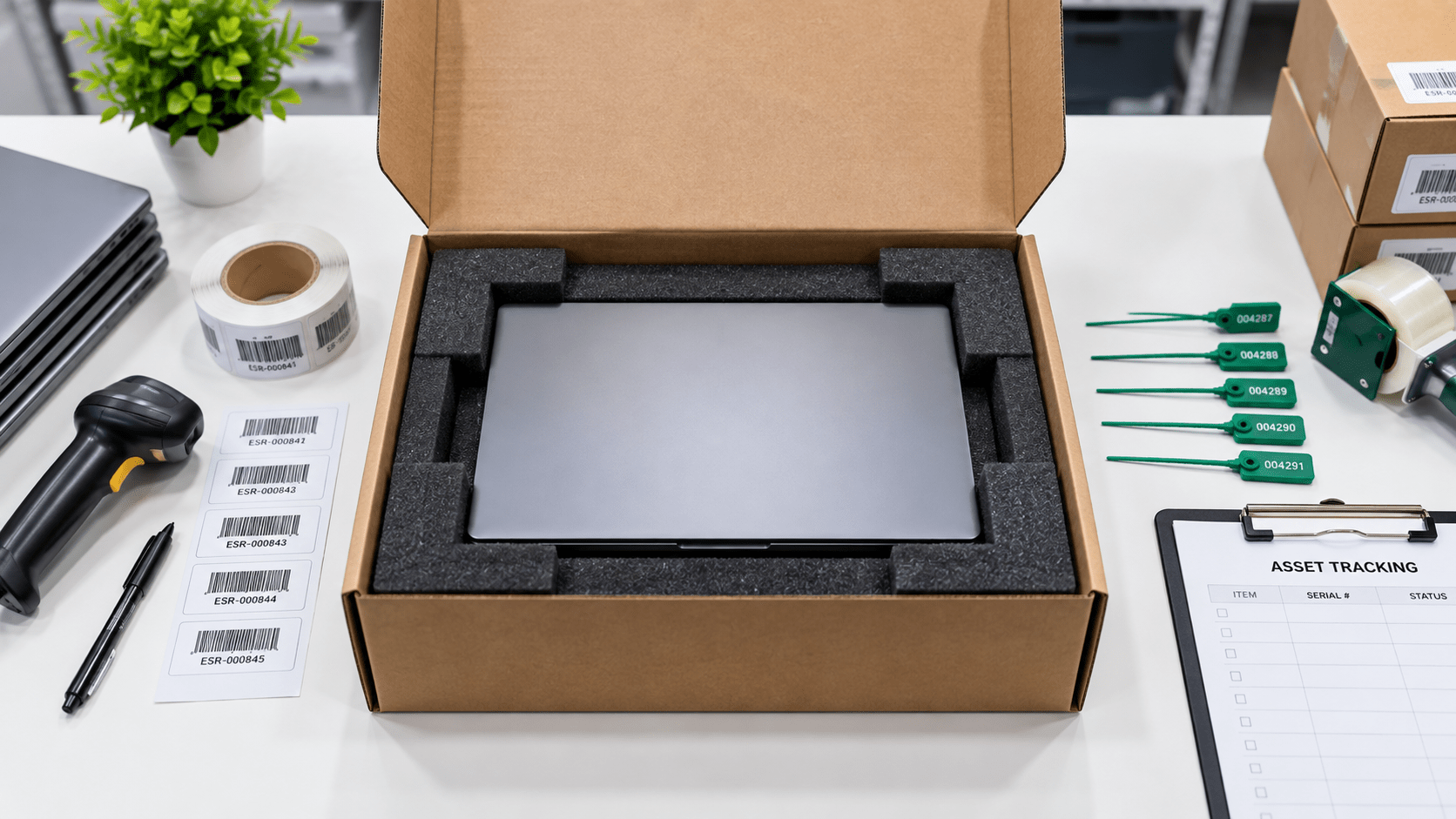
The shift toward hybrid and remote work has reshaped IT operations. A laptop replacement that once happened in a corporate hallway can now involve coordinating individual shipments with employees spread across dozens of cities across the country.
When an employee leaves the organization or a device reaches the end of its refresh cycle, a critical operational challenge appears: IT asset reverse logistics. Building a reliable process to recover, sanitize, and redeploy these computers helps maintain productivity while protecting corporate information and network security.
Managing devices outside central offices creates several recurring challenges:
A structured system can make remote device recovery faster and easier to manage:
A well-structured reverse logistics program reduces the administrative workload associated with packaging devices, tracking shipments, and reconciling asset records. IT support teams can spend more time on systems architecture and supporting active users.
eSmart Recycling supports companies across Florida and throughout the U.S. with secure remote-device recovery solutions, providing asset traceability and certified data sanitization throughout each shipment.
A structured reverse logistics program helps maintain continuous custody of corporate information while accelerating the return of devices into the productive asset cycle. Standardized recovery and sanitization procedures reduce operational delays and create a smoother experience for distributed workforces.
Simplify your remote device lifecycle: Contact us or complete our form to learn about our corporate reverse logistics solution and secure device recovery services.
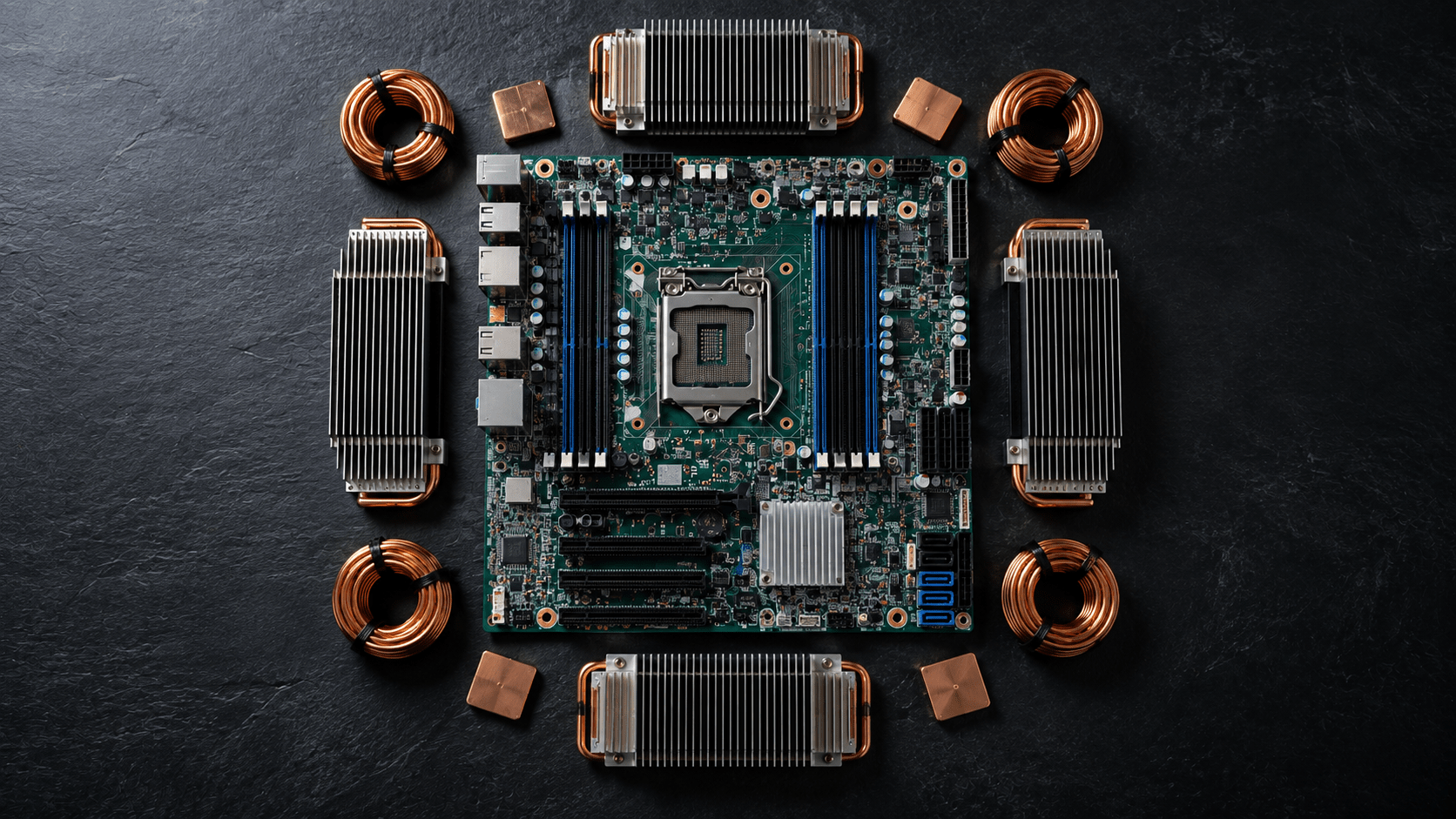
If you work in sustainability leadership or serve on your organization’s ESG committee, you know the challenge: institutional investors, corporate customers, and auditors increasingly expect environmental data that is measurable, verifiable, and supported by established methodologies.
A major area of attention is Scope 3 emissions, which cover activities across an organization’s upstream and downstream value chain. Responsible IT hardware management provides a measurable way to document progress in circularity and reductions in the environmental footprint associated with technology assets.
A significant share of a corporate technology device’s carbon footprint, whether it is a laptop, monitor, or server, is generated during raw material extraction and manufacturing, long before the user turns the device on for the first time.
Every additional period of useful life gained through refurbishment can reduce the need for new manufacturing. The same applies to the recovery of materials such as gold, silver, palladium, copper, and rare earth elements through formal recycling processes.
To incorporate e-waste management into reporting frameworks such as GRI (Global Reporting Initiative), SASB, or CDP, consider tracking the following metrics:
eSmart Recycling provides corporate partners with environmental metrics following each collection. The documentation includes processed volumes, carbon savings calculations, and the final destination of materials, giving sustainability teams information they can use in annual sustainability and corporate governance reporting.
Including hardware circularity in your corporate sustainability strategy creates a stronger record of how technology assets are managed throughout their lifecycle. Tracking Scope 3-related emissions, material recovery, and equipment reuse gives sustainability teams measurable information to support ESG reporting and communicate progress to customers, investors, and other stakeholders.
Strengthen your ESG metrics this year: Contact us through our form to learn how to document the environmental contribution of your IT asset retirement program with supporting data.
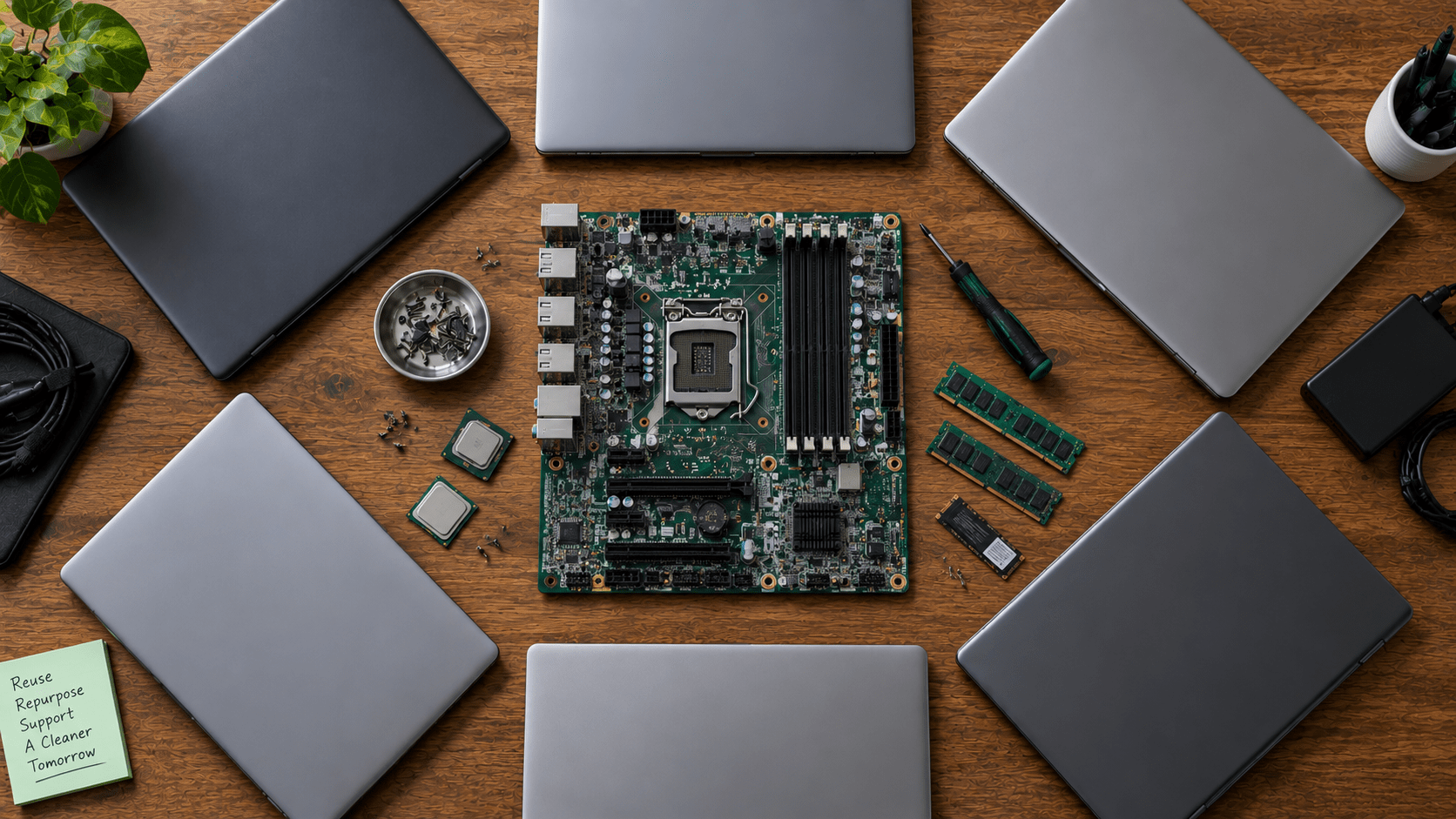
Let’s talk about corporate finance clearly: technology refreshes represent a significant capital and operating expense for growing organizations. At the same time, hardware reaching the end of its useful life can retain measurable market value. Structured ITAD programs give organizations a way to recover part of that value through responsible resale and remarketing.
Integrating hardware resale into your asset management strategy can turn retired technology into a source of recovered funds for future technology needs.
Corporate hardware can lose secondary-market value quickly. New processor generations, changes in memory standards such as DDR, and operating system updates can accelerate the decline in commercial value.
Keeping computers, laptops, and servers in storage for entire quarters can further reduce their resale value. The timing of the decision to retire a hardware lot can determine whether the organization captures meaningful financial recovery or continues carrying storage and disposition costs.
For finance teams, accounting traceability is essential. Each retirement project managed by eSmart Recycling provides a detailed reconciliation report connecting the serial number in your fixed-asset records with the final disposition of the equipment, whether through resale, refurbishment, or material recycling.
This documentation gives your accounting team a clear record for formally removing assets from inventory while supporting applicable tax and financial reporting requirements.
Managing retired hardware as a financial asset can help offset part of the cost of acquiring new technology. Coordinated refresh schedules and qualified remarketing partnerships give organizations a structured way to recover value from equipment while maintaining clear and transparent asset records.
Looking to recover more value from your IT hardware? Complete our contact form or reach out to our team to request an estimate of the residual value of your available technology assets.
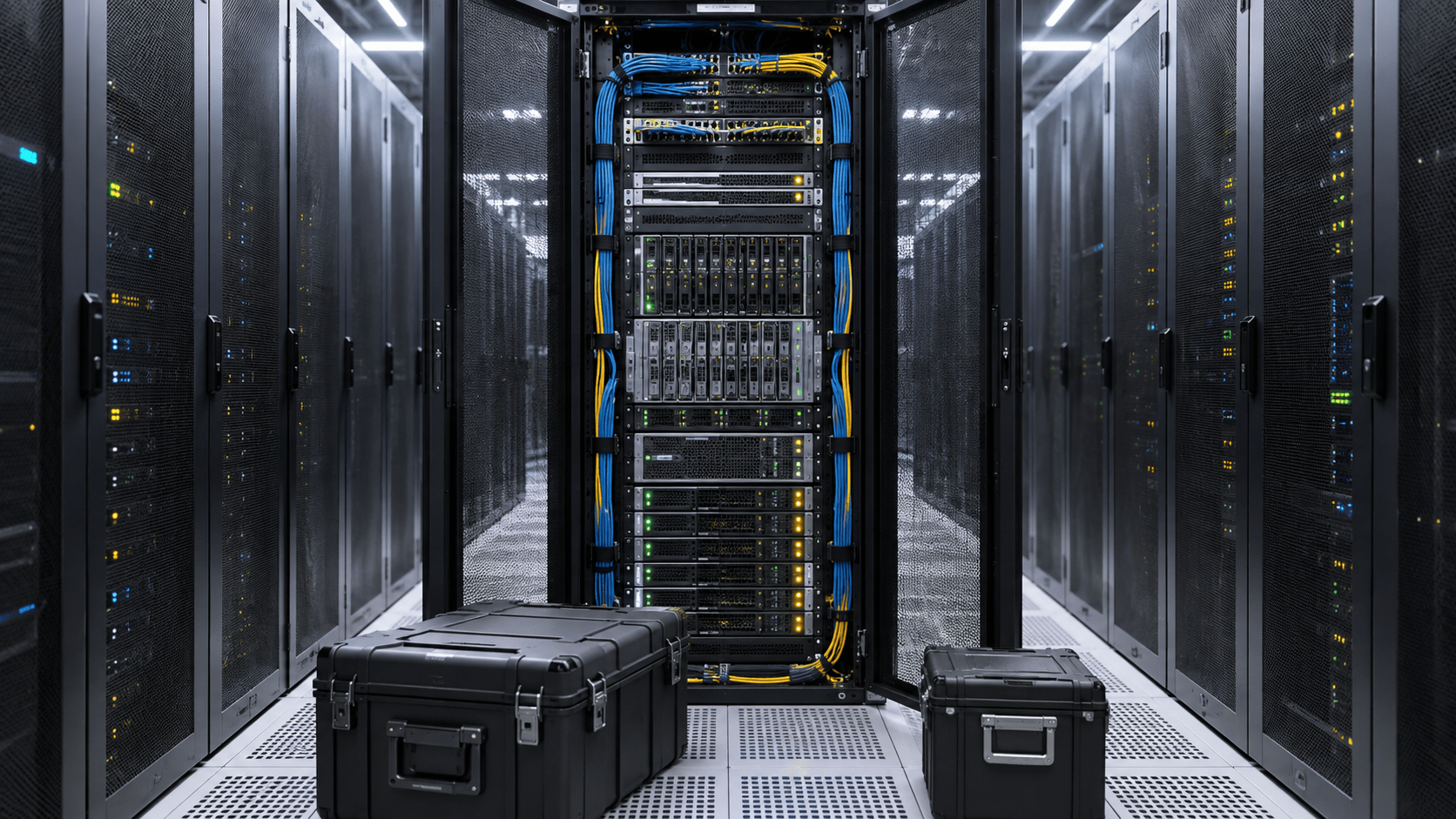
If you manage critical infrastructure or data centers, you know that migrating workloads to hybrid architectures or carrying out a large-scale technology refresh requires precision. Disconnecting entire racks, removing core switches, and decommissioning SAN arrays involves logistical risks that demand a carefully coordinated execution plan.
Successful decommissioning combines operational speed, strict physical security, and complete traceability for every asset leaving a cage or server room.
Corporate infrastructure decommissioning presents several complex considerations:
Structuring the process into clear stages creates an orderly and transparent workflow:
For companies operating data infrastructure across Tampa Bay, Orlando, Miami, and the Southeast, working with a nearby logistics partner can shorten response times and reduce the amount of time sensitive equipment spends in transit.
At eSmart Recycling, we manage end-to-end data center decommissioning projects while supporting R2v3 environmental compliance and strong corporate data protection throughout every stage of the project.
Planning infrastructure decommissioning with a specialized provider can turn a potentially disruptive operation into an organized, secure, and commercially sound process. A combination of qualified technical disassembly, secure transportation, and documented destruction helps preserve the value of your hardware while supporting the operational security of your organization.
Planning an infrastructure refresh or facility turnover? Contact us or complete our contact form to coordinate the details with our team and optimize your decommissioning schedule.







Did you enjoy our latest blog articles just above?
Subscribe to receive new stories, insights, and impact updates straight to your inbox.
We’ll send you curated content about our partners, recycling strategies, success stories, and how your involvement is driving change through technology access and digital empowerment.
💡 No spam, just the smart stuff.