








eSmart
Recycling
Securely manage and recycle technology to sustainably maximize and measure social impact.
#eSmartWay
What best describes you?
Choose Your Path to Make a Difference
Business / Institutional
IT Asset Management and Disposition Services that fit your needs.
Nonprofits
A sustainable source of refurbished computers for the kids and families you serve
Residential
Recycle your old electronics, and join the E-Revolution
Discover the
eSmart way
It's always a win-win-win
and let’s create one together.
Meet the network behind every refurbished computer
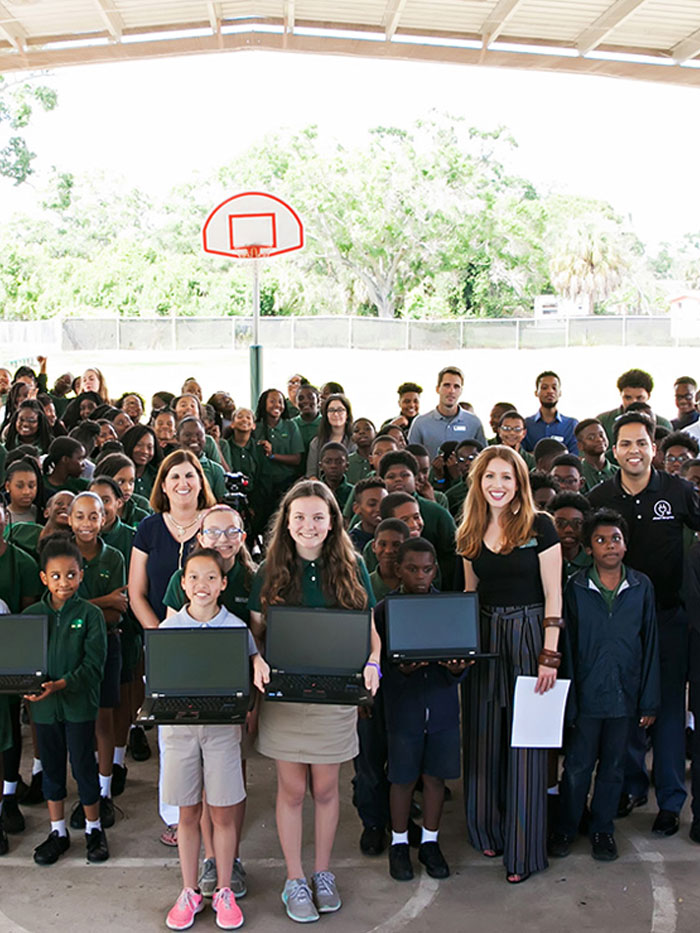
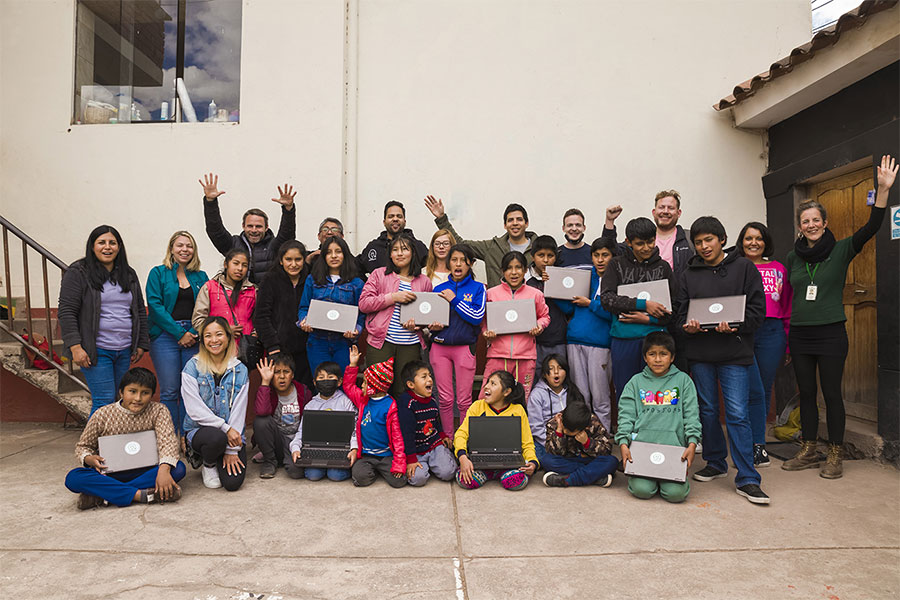
eSmart Recycling provides refurbished technology and supports the efforts of The Digital Education Foundation, which works alongside amazing community partners to connect kids and families with computers, connectivity, and digital education.
Measure and showcase
your environmental and social impact
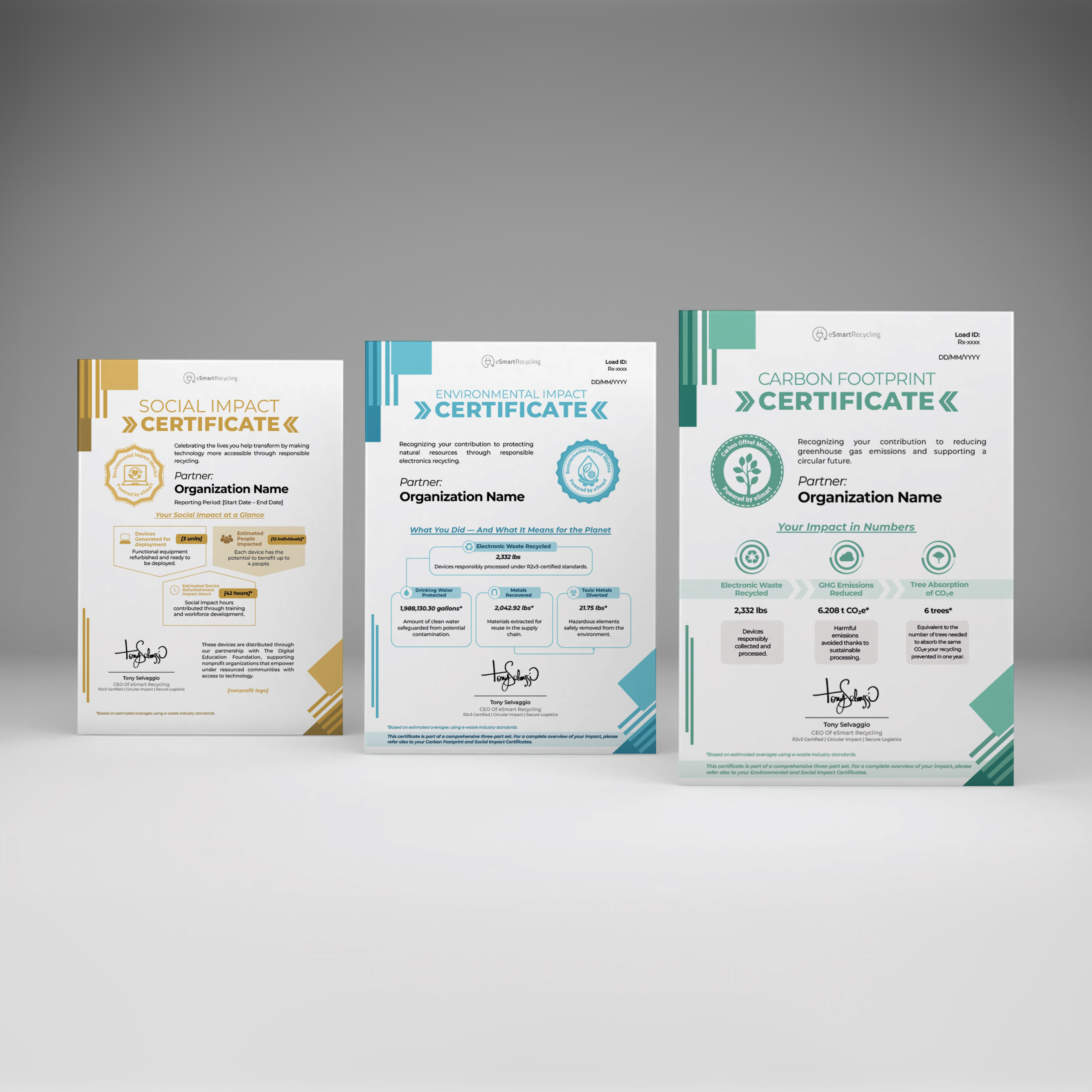
Keep track of the efforts in real-time through your partner portal.
Need tailored reporting for your sustainability goals?
We design custom plans to align with your company’s impact strategy.
Highest complience standarts
for data security and recycling
Your data security is one of our biggest priorities. We are 100% committed to protecting your personal and business information, IT assets, and business interests.
At eSmart Recycling, we understand our customers need to focus on what they do best, and that’s why they rely on us to get the job done, right. We provide a transparent full chain of custody as we manage the process of recycling, reuse, recovery, and retirement of electronic material at the highest compliance standards.
For more information about standards, certificates and compliance requirements, please contact us directly.
How does the
process work
1.
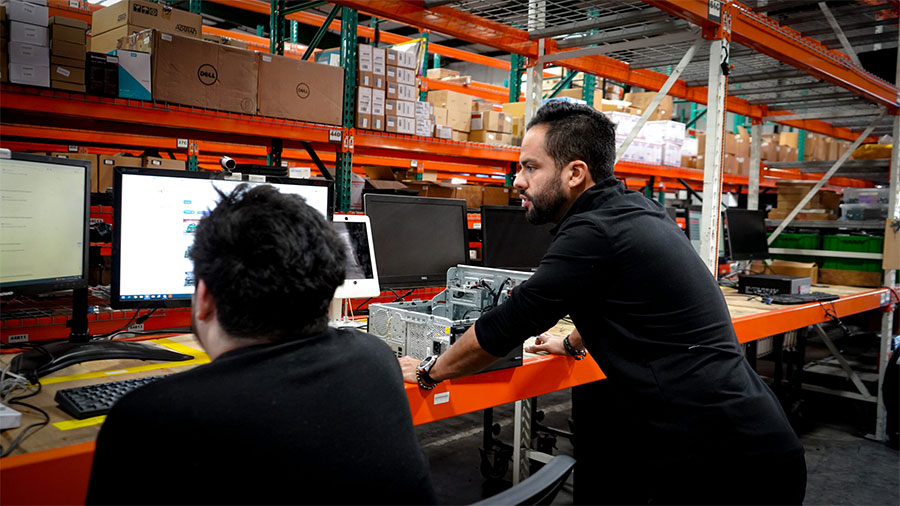
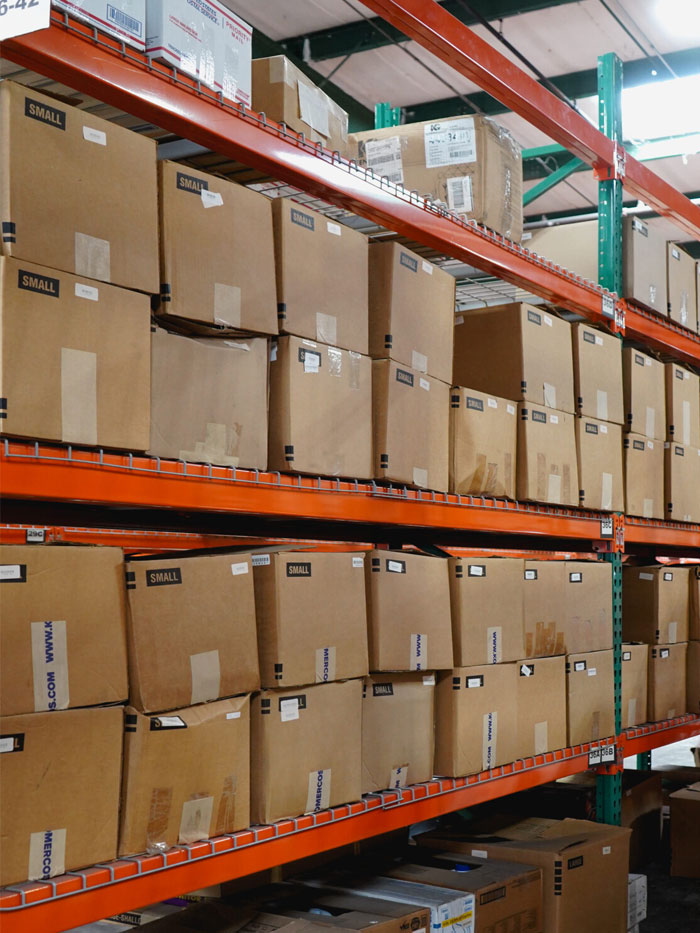
Equipment Collection: We take care of all the logistics.
2.
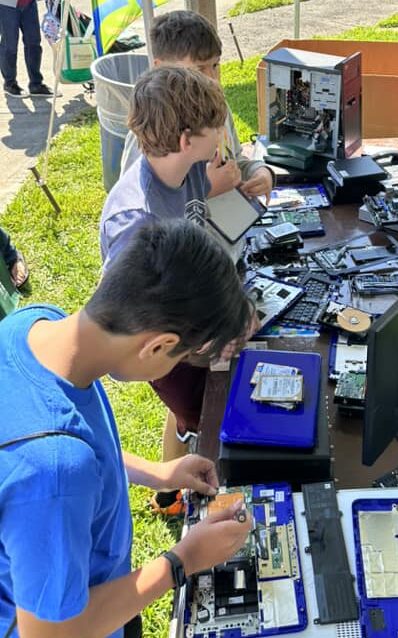
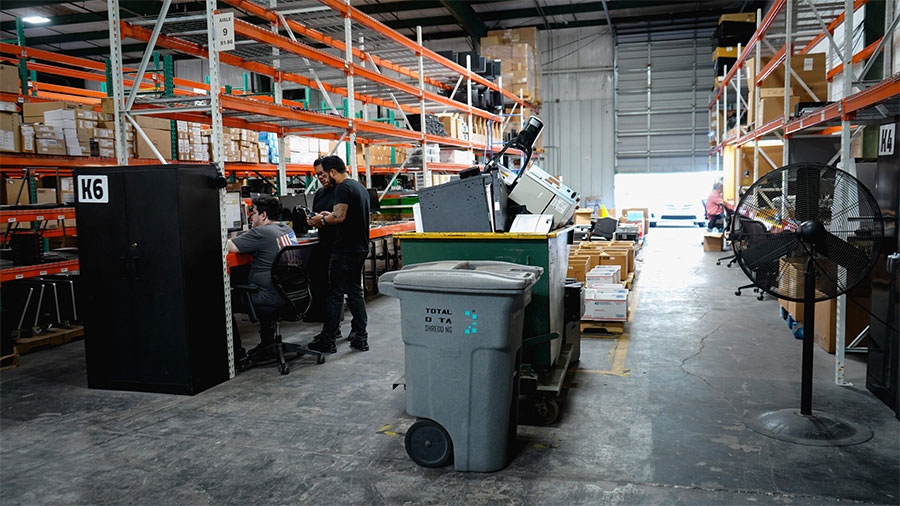
Audit and Inventory: Our robust inventory process takes account of every piece of equipment we collect, and we report it back to you.
3.
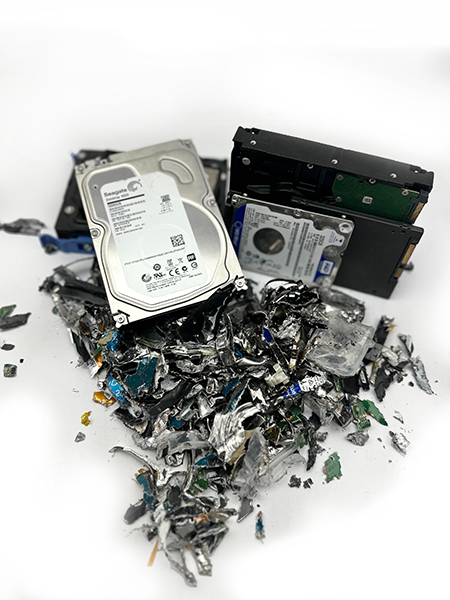
Data Destruction: We are your last line of defense. Here is when we remove hard drives and other data or media-containing devices and destroy them.
4.
Assessment: Here's where we find the best ways we have to monetize and generate impact with the material that was picked up.
5.
Partner Report: You'll receive access to your partner portal, where you will see exactly all documentation from each pick-up, such as your audit report, and certificate of data destruction. You will know your environmental footprint.
6.
Deployments and social impact: About 20% of our proceeds go towards funding computers for kids and families worldwide who don't have access to technology in partnership with the Digital Education Foundation.
Featured in:
![logos2[1]-04](https://esmartrecycling.com/wp-content/uploads/2023/09/logos21-04.png)
![logos2[1]-07](https://esmartrecycling.com/wp-content/uploads/2023/09/logos21-07.png)
![logos2[1]-08](https://esmartrecycling.com/wp-content/uploads/2023/09/logos21-08.png)
![logos2[1]-09](https://esmartrecycling.com/wp-content/uploads/2023/09/logos21-09.png)
![logos2[1]-10](https://esmartrecycling.com/wp-content/uploads/2023/09/logos21-10.png)
![logos2[1]-12](https://esmartrecycling.com/wp-content/uploads/2023/09/logos21-12.png)
![logos2[1]-13](https://esmartrecycling.com/wp-content/uploads/2023/09/logos21-13.png)
![logos2[1]-14](https://esmartrecycling.com/wp-content/uploads/2023/09/logos21-14.png)
![logos2[1]-18](https://esmartrecycling.com/wp-content/uploads/2023/09/logos21-18.png)
![logos2[1]-11](https://esmartrecycling.com/wp-content/uploads/2023/09/logos21-11.png)
+ 10,000
Kids and families now have access to technology because of our joint efforts
+ 10,000
Kids and families now have access to technology because of our joint efforts
+ 10,000
Kids and families
now have access to technology
because of our joint efforts
Join us in making the world a better place
As we continue to evolve, we are understanding that equality of opportunities across the board must be a priority on everyone’s agenda. Humanity’s biggest threat right now is the lack of sustainable access to basic human rights, such as education, and technology. It is our responsibility to lead by example, to think outside the box, and to work together to solve the problems our community is facing. It starts with an old computer.
Are you ready to join the E-Revolution?
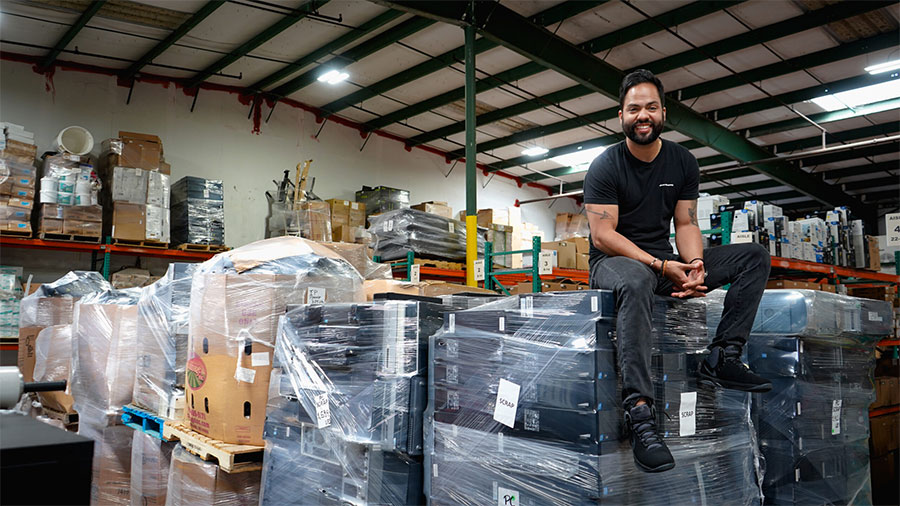
Tony Selvaggio, CEO
Our team
Awesome people great results
Together we can make a difference, and our team is the driving force that turns ideas into reality.
Sol Tello
Partner Development Specialist
Walter
Test Bench Specialist
Fernando
Packing Specialist.
Ronald
Route Specialist
Luis
Warehouse Manager
Antonio
e-Commerce Sales Specialist
We take action
Because every number tells a story
Adults will have received no education beyond primary school by 2030 — Gordon Brown.
Of electronics end up in landfills, contaminating the earth, according to the EPA.
Of our proceeds go toward refurbishing computers and deploying them through our amazing community partners.
Computer deployed through our programs reaches an average of four people.
Every stat represents a life changed, a computer reused, a step toward a better world.

Our blog
Recent News & articles
Stay up to date on what we are doing in the community along with our partners, and other relevant information in the world of technology, and sustainability.
January 19, 2026
Before companies recycle their electronic equipment, the questions usually come quietly. They appear in internal emails, short meetings, or last-minute conversations just before a pickup is scheduled. These questions are rarely about recycling as an idea. They are about responsibility, process, and what happens once the equipment leaves the building.
At eSmart Recycling, we hear these questions every week from companies across the U.S. They come from IT managers, operations teams, and sustainability leads who want clarity before moving forward. Understanding these concerns helps companies recycle with confidence instead of hesitation.
What happens to our equipment after pickup?
This is often the first question companies ask, even if it is not always said out loud. Once equipment leaves the site, there is a natural loss of visibility. Companies want to know where devices go, how they are handled, and whether the process continues in a controlled way.
A structured recycling process does not end at pickup. Equipment should move through defined internal steps that are documented and traceable. When companies ask this question, they are usually seeking reassurance that recycling is not a blind handoff, but a managed sequence with clear outcomes.
How is data handled before and after recycling?
Even when devices are no longer in use, concerns around data remain. Companies often ask whether equipment still contains information and how that information is addressed during recycling.
This question is less about technical detail and more about trust in the process. Companies want to avoid uncertainty once devices leave their control. Clear procedures and internal handling standards help ensure that data-related concerns are addressed early, rather than becoming unanswered questions later.
Do we need to prepare equipment before pickup?
Many organizations assume that recycling starts only when a truck arrives. In reality, companies often want to know what they should do beforehand.
This includes questions about sorting, labeling, or simply understanding which devices are included. Preparation helps avoid confusion during pickup and reduces the chance of equipment being overlooked or mishandled. When companies ask this, they are usually looking for guidance rather than extra work.
Is all equipment treated the same way?
Another common question is whether laptops, desktops, servers, and peripherals follow the same path once recycled. Companies recognize that not all devices are equal and want to know how differences are handled.
Clear processes account for these variations without forcing companies to manage them internally. This question often reflects a desire for simplicity paired with accountability.
How do we know the recycler follows recognized standards?
As companies become more familiar with electronics recycling, they begin asking about certifications and industry standards. This question usually comes once a company has experienced unclear or inconsistent recycling in the past.
Certifications such as R2v3 are designed to bring structure and consistency to electronics recycling. R2v3 is maintained by Sustainable Electronics Recycling International and defines requirements for handling, documentation, and downstream management of equipment.
For companies, asking about certification is a way to verify that a recycler follows documented practices rather than informal methods.
What kind of documentation will we receive?
Documentation is another topic that surfaces early in conversations. Companies want to know whether they will receive confirmation once recycling is complete and what that confirmation looks like.
This question is rarely about paperwork alone. It reflects a need to close the loop internally. Documentation allows teams to confirm that equipment was handled properly and that the recycling process reached a clear endpoint.
Can recycling fit into our regular operations?
Some companies worry that recycling will interrupt daily work or require special coordination. They ask whether pickups can be scheduled smoothly and whether the process adapts to their timelines.
These questions often come from teams that have experienced rushed cleanouts or last-minute recycling efforts. Companies are looking for a process that works alongside normal operations rather than disrupting them.
What happens if we have mixed or older equipment?
Organizations often accumulate electronics over time. When they finally decide to recycle, they may have equipment from different years, departments, or uses.
Companies ask whether this creates complications. In most cases, the concern is about whether older or mixed equipment can still be handled in an orderly way. Clear intake processes help avoid confusion and keep recycling manageable, even when inventories are not perfectly organized.
How do we avoid repeating this situation in the future?
Once companies begin asking questions, they often start thinking beyond the current recycling cycle. They want to know how to prevent electronics from piling up again.
This question signals a shift from reactive cleanouts to ongoing management. Companies begin to see recycling as part of regular asset lifecycle handling rather than an occasional task.
Why these questions matter
The questions companies ask before recycling are not obstacles. They are indicators of responsibility. They show that organizations want to understand what they are participating in and how their decisions carry forward.
When these questions go unanswered, recycling becomes uncertain. When they are addressed clearly, companies move forward with confidence and consistency.
How we approach these questions at eSmart Recycling
At eSmart Recycling, our role is to answer these questions before they turn into concerns. We work with companies to explain each step of the recycling process in plain terms, from preparation to completion.
As an R2v3-certified recycler, we follow defined procedures that help companies maintain clarity throughout the recycling process. This allows organizations to recycle equipment knowing what happens before, during, and after pickup.
Over time, these conversations help companies shift from one-time recycling events to steady, repeatable practices.
Moving forward with clarity
Companies rarely hesitate to recycle because they do not care. They hesitate because they want to understand what they are handing off.
Asking questions before recycling is not a delay. It is part of responsible decision-making. With clear answers and structured processes, recycling becomes less of a concern and more of a normal operational step.
From eSmart Recycling, we see these questions as the starting point of better electronics management, not the end of the conversation.
August 31, 2023
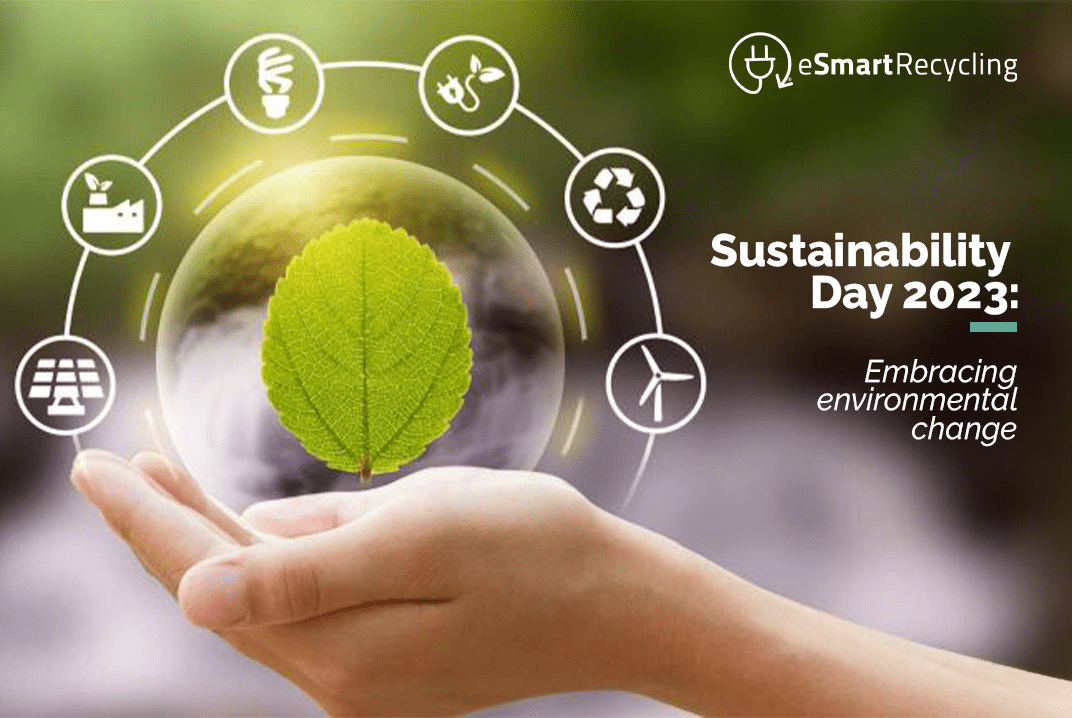
World Sustainability Day is an annual event celebrated globally to raise awareness about environmental issues and promote sustainable practices. This day serves as a reminder of the importance of preserving our planet for future generations. In 2023, Sustainability Day aims to inspire individuals, organizations, and governments to intensify their efforts toward creating a greener and more sustainable future.
Tackling the Trend Toward Environmental Sustainability
In 2023, there is a growing trend to prioritize environmental sustainability. People from all walks of life are becoming increasingly aware of the impact of their actions on the planet. Companies are adopting sustainable practices not only to protect the environment but also to enhance their reputation and appeal to environmentally-conscious consumers. Governments also play a pivotal role by implementing policies and regulations that promote sustainability.
One of the main drivers of this trend is the growing concern about climate change. With rising global temperatures, extreme weather events, and the melting of polar ice caps, the need for immediate action has never been so pressing. Sustainability Day 2023 aims to accelerate efforts to reduce greenhouse gas emissions, conserve resources, and transition to renewable energy sources.
Green Initiatives for 2023
Several green initiatives are set to launch in 2023 to pave the way for a greener future. These initiatives focus on various aspects of sustainability and aim to tackle key environmental challenges. Notable green initiatives to watch out for include:
Sustainable Energy Transition
The shift from fossil fuels to renewable energy sources is gaining momentum. In 2023, we can expect increased investments in renewable energy projects such as solar and wind. Governments and businesses are recognizing the potential of these clean energy sources to cut carbon emissions and mitigate climate change.
Circular Economy
The circular economy concept seeks to minimize waste and maximize resource efficiency. In 2023, more companies are anticipated to implement sustainable practices like recycling, upcycling, and adopting eco-friendly packaging. The goal is to establish a closed-loop system where materials are reused instead of discarded.
Sustainable Agriculture
Agriculture significantly impacts the environment. In 2023, we foresee the expansion of sustainable farming practices like organic farming, precision agriculture, and regenerative farming techniques. These methods focus on reducing chemical inputs, soil erosion, and water use while ensuring food security and soil health.
The Significance of Sustainability Day
Sustainability Day plays a vital role in promoting environmental awareness and driving positive change. This annual event provides a platform to educate and engage individuals, businesses, and policymakers about the importance of sustainable practices. By raising awareness, Sustainability Day encourages people to adopt green habits, businesses to implement sustainable strategies, and governments to enact policies that prioritize the environment.
By celebrating Sustainability Day, we can collectively work towards a more sustainable future. The decisions we make today will have a lasting impact on the planet and future generations. Embracing sustainability isn’t just a trend; it’s essential for our planet’s survival.
At eSmart Recycling, we are committed to promoting sustainability and environmental awareness. Through our electronic waste recycling services, we aim to minimize the environmental footprint of electronic devices by ensuring their proper recycling and disposal. Join us in celebrating Sustainability Day 2023, and together let’s build a greener future.
August 31, 2023
Rural areas play a crucial role in our society, providing essential resources and maintaining a harmonious balance between nature and people. However, sustainable development in these regions has become increasingly important as we strive to address global challenges like climate change and resource depletion. In this article, we will explore effective strategies to promote sustainability in rural areas and ensure their long-term viability.
The importance of sustainable rural development.
Sustainable rural development is a comprehensive approach that seeks to balance economic growth, social equity, and environmental stewardship in rural areas. By adopting sustainable practices, these regions can enhance the well-being of their communities while preserving their natural resources for future generations. Here are some key reasons sustainable rural development is vital:
- Preserving the environment.
Rural areas often have pristine habitats, rich biodiversity, and fragile ecosystems. Promoting sustainability in these regions safeguards these natural resources from overexploitation and degradation. By encouraging practices such as organic farming, afforestation, and wildlife conservation, we can maintain the ecological balance and protect various species that thrive in rural landscapes.
- Enhancing livelihood opportunities
Sustainable rural development fosters economic growth while ensuring equitable distribution of resources. Investing in local enterprises, supporting small-scale agriculture, and promoting tourism can create employment opportunities for rural communities. Additionally, encouraging entrepreneurship and innovation can help generate sustainable revenue streams and improve the quality of life for rural inhabitants.
- Food security and resilience.
Rural areas are often the backbone of the agricultural sector, providing food and essential raw materials. Sustainable practices such as organic farming, crop rotation, and water-efficient irrigation systems can enhance agricultural productivity while reducing the use of harmful chemicals and preserving soil health. These measures ensure food security for the growing global population and strengthen rural communities’ resilience against climate change impacts.
Strategies for promoting sustainability in rural areas
Now that we understand the significance of sustainable rural development, let’s explore some effective strategies to promote sustainability in these areas:
- Education and Awareness
Creating awareness about sustainable practices is crucial for driving change in rural areas. Local schools and community centers can organize workshops and training programs to educate farmers and residents about environmentally friendly techniques, waste management, and energy conservation. Raising public awareness helps build a sustainable mindset and empowers individuals to make responsible choices.
- Infrastructure development
Investing in sustainable infrastructure is vital for rural development. This includes efficient transportation systems, renewable energy sources, and improved water and sanitation facilities. Building eco-friendly infrastructure not only enhances the quality of life for rural communities but also helps reduce their carbon footprint and dependence on fossil fuels.
- Support for local enterprises
Empowering local small-scale enterprises is key to sustainable rural development. Governments and organizations can provide rural entrepreneurs with financial support, technical assistance, and market access. Encouraging the use of local resources, promoting traditional crafts, and facilitating access to markets can help these businesses thrive while preserving the unique cultural heritage of rural areas.
- Natural resource management
Efficient management and conservation of natural resources are crucial for sustainable rural development. Implementing sustainable farming practices, promoting watershed protection, and encouraging responsible forestry are essential steps to preserve biodiversity and maintain the ecological balance. Moreover, promoting sustainable fishing practices and protecting aquatic ecosystems can help ensure the long-term viability of rural communities dependent on aquatic resources.
The way forward
Promoting sustainability in rural areas is a collective effort that requires collaboration between governments, communities, and various stakeholders. Developing policies and incentives that prioritize sustainable practices while fostering innovation and empowering local communities is essential. By investing in sustainable infrastructure, educating and raising awareness, supporting local enterprises, and implementing effective natural resource management strategies, we can pave the way for a prosperous and resilient future for rural areas.
Remember, sustainable rural development is not just a choice but a necessity. It is time to take action and positively impact the environment, economy, and social well-being of rural communities.
August 31, 2023
At eSmart Recycling, we are committed to providing efficient and reliable electronic recycling services to both individuals and businesses. We understand the importance of responsibly disposing of electronic devices and aim to ensure that they are recycled in an environmentally friendly manner. In this article, we will discuss the various types of devices that we accept at eSmart Recycling and the services we offer to make the recycling process hassle-free.
1. Smartphones and tablets
Smartphones and tablets have become an integral part of our daily lives. As technology advances rapidly, many of us frequently upgrade to newer models. By recycling these devices properly, we help prevent hazardous substances such as lead, mercury, and cadmium from entering our ecosystem.
2. Computers and laptops
With the constant evolution of technology, computers, and laptops have become essential tools for both personal and professional use. However, when outdated or damaged, they can contribute to electronic waste if not handled properly. Our expert team ensures that all sensitive data stored on these devices is securely erased before recycling.
3. Printers and scanners
Printers and scanners play a vital role in many offices, but they can become outdated or malfunction over time. We accept a wide range of printers and scanners, including laser printers, inkjet printers, and flatbed scanners. Our recycling process adheres to strict environmental standards, ensuring that both the electronic and plastic components are appropriately recycled.
4. Gaming consoles and accessories
Gaming consoles and accessories have gained immense popularity, inspiring countless hours of entertainment for users worldwide. However, as newer models are released, older ones often end up unused and forgotten. eSmart Recycling accepts gaming consoles, controllers, and accessories, allowing you to declutter your space responsibly. Our recycling process ensures that these electronic devices do not end up in landfills, posing potential harm to the environment.
Services offered
1. Secure data destruction
Protecting sensitive information is crucial, especially when recycling computers and laptops. At eSmart Recycling, we prioritize data security and offer secure data destruction services. Our professional technicians utilize industry-leading techniques to ensure that all data stored on recycled devices is irreversibly erased, keeping your confidential information safe.
2. Environmentally friendly recycling
We pride ourselves on adhering to environmentally friendly recycling practices. When you recycle your electronic devices with eSmart Recycling, you can rest assured that they will be processed using sustainable methods. Our certified recycling facilities are equipped to handle various types of electronic waste responsibly, minimizing the impact on our environment and conserving valuable natural resources.
3. Compliance with regulatory standards
We understand the importance of complying with regulatory standards when it comes to electronic waste disposal. Our processes align with all applicable local, national, and international regulations, ensuring that your devices are recycled in compliance with the law. By choosing our services, you contribute to a safer and cleaner environment while avoiding any legal implications related to improper disposal.
When it comes to responsible electronic recycling, eSmart Recycling is a trusted partner. We accept a wide range of devices, including smartphones, tablets, computers, printers, gaming consoles, and more. With our free pickup and collection services, secure data destruction, and environmentally friendly recycling practices, we aim to make the recycling process hassle-free for our customers. Choose eSmart Recycling for all your electronic recycling needs, and be confident knowing you are making a positive impact on the environment.


Join the E-Revolution
Did you enjoy our latest blog articles just above?
Subscribe to receive new stories, insights, and impact updates straight to your inbox.
We’ll send you curated content about our partners, recycling strategies, success stories, and how your involvement is driving change through technology access and digital empowerment.
💡 No spam, just the smart stuff.