Differences Between Data Deletion, Formatting, and Certified Destruction

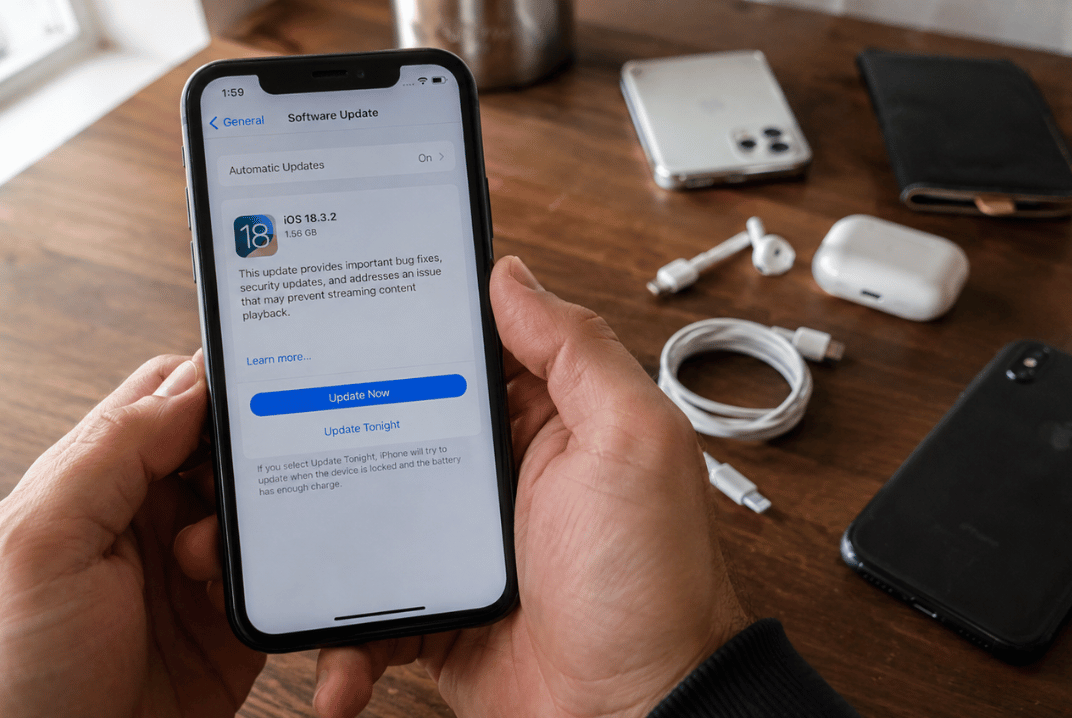
Is Deleting a File Enough? Not Always. When a company disposes of its electronic devices, data security should be a top priority. However, many people believe that simply deleting files or formatting a drive is enough to protect their information. The reality is that these methods can leave data recoverable.

In this article, we’ll explain the differences between data deletion, formatting, and certified destruction so you can make the best decision based on your security needs.

1. Data Deletion: Not as Secure as You Think

Manually deleting a file (sending it to the recycle bin and emptying it) only removes its reference from the operating system—the data still exists on the drive until it is overwritten by new information.

Can Deleted Files Be Recovered?

Yes. With specialized tools like Recuva or EaseUS Data Recovery, even a user with basic knowledge can restore deleted files.

When Is It Recommended?

Data deletion is useful for non-sensitive files or when you plan to continue using the device. However, if you’re selling, donating, or recycling a device, this method is not secure enough.

2. Formatting: A Deeper Clean, But Not Foolproof

Formatting erases all data from a drive and prepares it for reuse. There are two main types:

  • Quick format: Removes the file allocation table, but the data remains on the disk and can be recovered with specialized software.
  • Full format: Overwrites some areas of the disk, making recovery harder, but traces of data can still remain.

Can Data Be Recovered After Formatting?

It depends. If it was a quick format, recovery is easy with tools like Disk Drill. If it was a full format, recovery is more difficult but still possible with advanced techniques.

When Is It Recommended?

Formatting is useful when reusing a drive or preparing it for a new user within the same company. However, it isn’t enough to securely dispose of or sell a device.

3. Certified Data Destruction: The Only 100% Secure Method

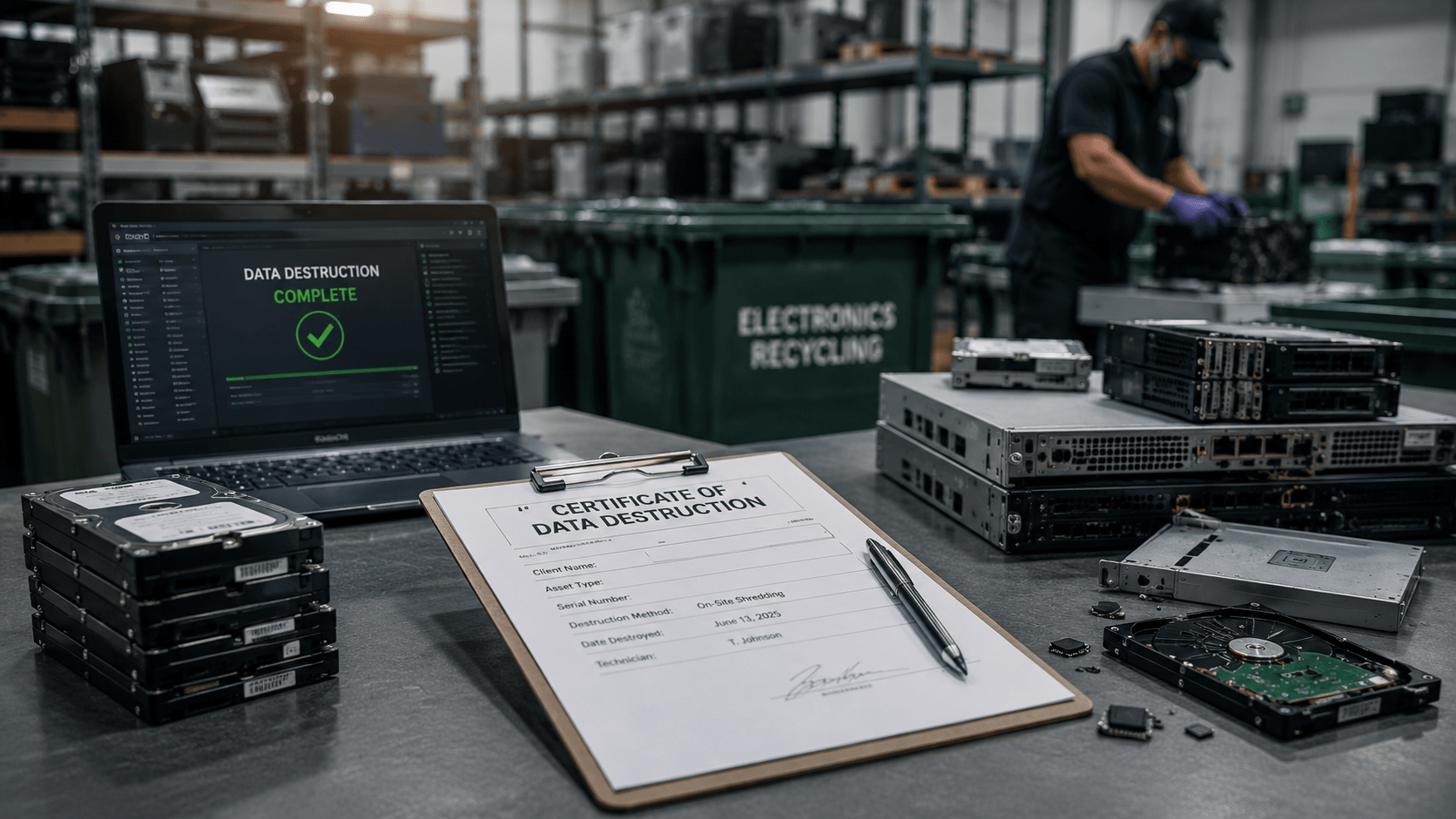
At eSmart Recycling, we know that data security is a top priority when disposing of electronic devices. Financial records, medical information, intellectual property—these are not just files; they are critical assets that must be protected at all costs. Simply deleting files or formatting a drive is not enough to ensure that data is permanently erased. That’s why we specialize in certified data destruction, following the highest industry standards, including R2v3 certification.

How Do We Ensure Complete Data Destruction?

Our process guarantees that your data is permanently erased and cannot be recovered using any method. We achieve this through:

  • Secure data wiping: We overwrite stored information multiple times using industry-approved methods, ensuring it is completely unrecoverable.
  • Degaussing: For traditional hard drives, we apply a powerful magnetic field that destroys all stored data.
  • Physical destruction: When necessary, we mechanically shred the device, eliminating any possibility of data retrieval.

Why Choose eSmart Recycling for Data Destruction?

Unlike basic deletion or formatting, our certified destruction process is designed to eliminate all risks associated with data leaks, regulatory non-compliance, and unauthorized access. Companies handling confidential information—whether in finance, healthcare, or technology—trust us because we combine security, compliance, and sustainability in every step of the process.

When your company needs to dispose of outdated electronics, you don’t just need recycling—you need a trusted partner that guarantees data security and environmental responsibility. At eSmart Recycling, we make sure your devices are handled safely, securely, and sustainably.

Which Method Should You Choose?

Method Security Level Can Data Be Recovered? Best Use
Manual Deletion Low Yes, easily Non-sensitive files in active use
Quick Format Medium-Low Yes, with recovery software Prepping drives for reuse
Full Format Medium Difficult but possible Internal device reuse
Certified Destruction High No Permanent disposal of devices

If your company needs to dispose of devices securely, certified destruction is the only guaranteed way to prevent data from falling into the wrong hands. In eSmart Recycling, we offer this service with R2v3 certification, ensuring compliance with regulations and total data protection.


Request a Pickup – We’ll Take It From Here

Fill out the form below to request your electronics recycling pickup.
We’ll coordinate the schedule logistics and follow up with next steps.

Recent posts

December 19, 2025

Reducing tech waste in IT projects is just as important as keeping your infrastructure running smoothly. If you manage sustainability or IT for a company in the U.S., this article breaks down three practical ways to minimize electronic waste (e-waste) — and how we, at eSmart Recycling, can help you do it safely, responsibly, and profitably.

Why tech waste in IT matters

Every year, millions of tons of electronic devices reach the end of their life. According to the Global E-waste Monitor 2024, 53.6 million tons of e-waste were generated in 2022, and only about 20% was properly collected and recycled.
For organizations managing large IT infrastructures — servers, workstations, peripherals, and networking gear — that means:

  • Compliance and data-security risks (due to toxic materials or improper data destruction).

  • Hidden costs in procurement, maintenance, and disposal

  • Missed opportunities for reuse, donation, and circular economy initiatives

Strategy 1: audit, assess, and extend device lifespan

Start with a clear inventory of all your IT assets — their condition, age, and actual usage. This lets you decide when to repair instead of discard, reassign devices to less demanding roles, or plan gradual replacements instead of mass hardware turnovers.
Many companies now use leasing or “hardware-as-a-service” models that make upgrades more predictable without generating huge waves of waste. Extending device lifespan reduces e-waste and helps you stabilize your IT budget at the same time.

Strategy 2: reuse and donation as part of the IT lifecycle

When equipment leaves your main operation, it doesn’t have to go straight to a landfill. That’s where we come in. At eSmart Recycling, we collect, audit, and securely destroy data following strict standards like HIPAA. Then we refurbish, value, and donate part of the recovered technology — roughly 30% of our revenue goes toward restoring devices for underserved communities.

This turns what could have been waste into social value. For your company, it means a measurable reduction of e-waste and a tangible expression of corporate responsibility. Reuse and donation also send a strong signal to employees, clients, and regulators: your IT asset management doesn’t end when devices are decommissioned — it continues through their second life.

Strategy 3: safe disposal and full traceability

When devices truly reach the end of their usable life, proper handling is essential — secure data destruction, certified recycling, and material recovery. The Global E-waste Monitor estimates that only around 20% of global e-waste is officially tracked and recycled. In the U.S., the Environmental Protection Agency (EPA) reminds that electronics contain hazardous materials and should never end up in untreated landfills.

Working with eSmart Recycling gives your company certificates of data destruction, environmental and social reports, and full traceability for every asset — helping you stay compliant, transparent, and credible in sustainability reporting.

How to start right now

  1. Audit the IT assets scheduled for replacement or disposal within the next 12 months.

  2. Identify which can be repaired, reused, or donated, and which truly need to be recycled.

  3. Partner with a certified recycler (like us) who ensures secure data destruction, proper valuation, and responsible donation.

  4. Track results — number of devices reused, donated, recycled, cost savings, and total e-waste reduced. This builds internal accountability and strengthens external ESG reporting.

By applying these three strategies, your organization not only reduces electronic waste but also builds a stronger reputation, meets sustainability goals, and frees up IT resources for what truly matters.

December 19, 2025

Turning corporate social responsibility (CSR) into measurable action means going beyond good intentions. It’s about doing, tracking, and communicating. Here’s how companies in the U.S. can take tangible steps—and how we at eSmart Recycling do it every day.

Step 1: Set clear goals and measurable metrics

Start by translating your company’s values into specific, actionable goals. For example: “Reduce electronic waste by 10% this year” or “Donate 500 refurbished devices to underserved communities.” Then assign metrics to track progress—devices collected, percentage reused, tons of e-waste diverted, etc.

Why it matters: 90% of S&P 500 companies now publish ESG reports, and 76% of consumers would stop buying from a brand that doesn’t protect social or environmental well-being.

At eSmart Recycling, we allocate about 30% of our revenue to repair and donate computers—this is one of our measurable KPIs, not just a statement of intent.

Tips to get it right

  • Choose quantifiable, time-bound metrics (monthly, quarterly).

  • Link metrics to real beneficiaries (“x families,” “z communities”) instead of generic percentages.

  • When possible, use recognized frameworks like Ceres or the Carbon Disclosure Project.

Step 2: Implement real initiatives and document progress

Once goals and metrics are set, it’s time to act. This can include audits, collection drives, NGO partnerships, or employee engagement programs. The key is to document every step so you can later report credible data.

For instance, a tech company can collect outdated routers and laptops, securely destroy data (as HIPAA requires in some cases), and donate the working devices. That’s exactly what we do at eSmart Recycling: we collect, audit, value, and repurpose technology so it keeps serving people instead of ending up as waste.

Documenting this process allows you to report outcomes such as: “We collected X tons of equipment,” “Reused Y %,” or “Donated Z devices to N families.” With real numbers, CSR becomes a visible action.

Real-world proof

About 73% of investors now consider CSR practices in their decisions. Showing execution and documentation builds trust among employees, customers, and investors alike.

Step 3: Communicate results and keep improving

Finally, transparency turns action into credibility. Share what you’ve done, report your data, and review your progress regularly. Reports, certificates, and environmental or social summaries build trust and strengthen partnerships.

At eSmart Recycling, we share “certificates of secure data destruction” and detailed “donation reports” with our partners. This evidence shows accountability.

Revisiting your metrics often also helps: if your quarterly numbers fall short, adjust the plan—collect more, improve logistics, or engage more employees. Continuous measurement keeps your CSR program alive and credible.


Reporting is no longer optional: social and environmental disclosures are becoming standard business practice. Companies that show how they act—not just what they believe—stand out from those still talking about responsibility in theory.

Each of these steps—setting measurable goals, executing and documenting, communicating and improving—turns CSR from words into measurable results. If your company is ready to take that leap, we at eSmart Recycling can help with technology collection, data auditing, valuation, and device donation programs that make your social commitment measurable.


December 19, 2025

When a company decides to recycle its technology, it wants to do it right — safely, smoothly, and with clear results. But not every recycling program works the same way.
At eSmart Recycling, we know it’s not just about picking up old equipment. It’s about giving technology a new purpose and doing it responsibly.

First things first: your data stays safe

Every pickup starts with a full audit. We inventory, classify, and guarantee secure data destruction, meeting standards such as HIPAA and other privacy regulations.
Nothing is left to chance — every device goes through a documented process, backed by certificates of destruction and complete traceability. It’s the most transparent way to protect your information while reducing environmental impact.

Reuse comes before recycling

A lot of the equipment we collect still has life left in it. That’s why we allocate around 30% of our revenue to repairing and refurbishing computers, laptops, and other devices before donating them.

Each refurbished device becomes a tool for a school, a family, or a community that needs it. That’s what drives us — reducing waste, connecting people, and extending the life of technology.

Everything is tracked

From the first pickup to the final donation, every step is recorded. Our partners receive environmental and social reports, data destruction certificates, and impact summaries they can include in sustainability or CSR reports. If your company upgrades its laptops, for example, we’ll show you how many were securely destroyed, how many were refurbished, and who benefited from them. Everything is clear, measurable, and verifiable.

Local roots, direct communication

We’re based in Tampa, Florida (5100 Vivian Place, Tampa, FL 33619). We serve businesses across the U.S., but we keep our communication personal. We coordinate collections without bureaucracy, keep you updated throughout the process, and make sure everything runs smoothly. We’re not a distant vendor — we’re part of the same commitment to doing things right.

When working with us makes sense

Our program is a good fit if your company:

  • Needs verified and secure data destruction.

  • Wants recycling efforts to generate measurable social value.

  • Requires detailed reports for sustainability or CSR teams.

  • Has retired devices that could be reused before recycling.

  • Values a transparent, responsible partner with a clear purpose.

Contact us

If your company wants to recycle its technology safely and with purpose, get in touch with us here. We can schedule a pickup, review your equipment, and help you make sure it continues its life in the right way.  Because when technology is reused responsibly, everyone benefits.


December 9, 2025

Electronic waste —or e-waste— is piling up at an alarming rate, with consequences comparable (and in some ways worse) than those of plastic. For companies in the U.S. committed to sustainability, understanding this issue is no longer optional: it has operational, legal, and reputational implications.

Why e-waste is such a big deal

In 2022, the world generated around 62 million tons of electronic waste, a figure projected to reach 82 million by 2030.
Only about 22 % of that amount was formally collected and recycled.
Just like plastic decades ago, e-waste often ends up hidden in storage rooms or landfills, quietly building up. Ignoring it might seem harmless —until it isn’t.

The parallels with 21st-century plastic

1. A growing flood

E-waste follows the same pattern as plastic did: short product lifespans, multiple devices per person, and products that are hard to repair.
Companies constantly upgrade equipment, but very few plan for what happens after.

2. Toxic, persistent materials

Electronics contain heavy metals like lead, mercury, and cadmium, along with brominated flame retardants. When dumped or processed informally, these elements contaminate soil, air, and water.
Like plastic, e-waste doesn’t just disappear —it lingers.

3. Hidden value

Inside those discarded devices lie valuable materials: gold, silver, copper, and rare earth elements. Every ton of e-waste left unprocessed means losing resources that could feed back into supply chains.
Treating e-waste as “the new plastic” means recognizing that what looks like trash may still hold significant value.

What this means for your U.S.-based business

If your organization upgrades laptops, desktops, printers, routers, or cables, how you manage the old ones should be part of your sustainability plan.
With us at eSmart Recycling, we handle secure data destruction compliant with HIPAA, provide detailed inventory audits, and reinvest around 30 % of proceeds into repairing and donating devices to underserved communities.
Improper e-waste management can also create legal risks —while there’s no single federal law, most U.S. states have regulations covering electronics disposal.
Done right, it’s more than compliance: it builds credibility and trust with customers and partners.

Smart practices your company can adopt

  • Reuse before recycling —donate or repurpose devices whenever possible.

  • Work with certified recyclers who guarantee data destruction and full traceability.

  • Keep documentation of every stage: collection, transport, recycling, data wiping, and donation.

  • Educate your teams internally so that e-waste becomes as visible as plastic or packaging waste.

Why call it the “new plastic”?

Because e-waste has become what plastic was decades ago: cheap, convenient, and everywhere. It’s piling up fast, and only a small fraction gets recycled. The difference is that this time, we can act before it’s too late.

At eSmart Recycling, we believe in giving technology a second life —protecting the environment while connecting people who need access the most.


December 9, 2025

New regulations are coming, and if your business handles tech equipment, you’ll want to be ready. At eSmart Recycling, we collect and recycle corporate technology responsibly—helping companies meet compliance without stress.

What’s changing in 2026?

The U.S. still doesn’t have one single federal law for electronic waste. Instead, more states are passing Extended Producer Responsibility (EPR) laws, which require companies to manage the full life cycle of their products.

The EPA is also developing a national EPR framework for batteries, signaling tighter oversight of tech and electronic waste by 2026.

In short, if your business owns, sells, or disposes of IT equipment, you’ll need to:

  • Prove traceability and secure data destruction,

  • Comply with state-specific e-waste laws, and

  • Report how your hardware is recycled or reused.

Step 1: Know which laws apply to you

Different states, different rules.
If your company operates across several locations, map out where e-waste and packaging EPR laws are already active.
Also, check which devices contain sensitive data—because disposal without secure erasure can violate privacy laws such as HIPAA.

Step 2: Build a real tech disposal system

That means:

  • collecting all unused hardware (laptops, printers, routers, cables),

  • auditing every item and its data,

  • destroying data safely following NIST 800-88,

  • refurbishing and repurposing usable equipment, and

  • generating proper certificates for destruction and social/environmental tracking.

That’s what we do at eSmart Recycling. We handle every stage—from pickup to final reporting—so your compliance paperwork is covered, and your data stays protected.

Step 3: Prove it

Saying “we recycle” isn’t enough anymore. Regulators and clients want evidence.
Include your e-waste and recycling stats in ESG or sustainability reports.
Work only with certified tech recyclers (like us).
And document your data destruction and donation processes to show that devices truly reached a responsible end.

Step 4: Stay ahead of future controls

Many state EPR laws will start requiring producer registration and reporting by 2026.
Being compliant early doesn’t just protect you—it gives you a competitive edge. You’ll be able to say: we’re already ready for 2026.

At eSmart Recycling, we collect and recycle corporate tech, audit every device, securely erase data, and donate refurbished equipment to communities that need it most.
Preparing for 2026 starts with doing things right today.


December 9, 2025

When a company decides to recycle its technology with us, two things matter most: keeping data secure and giving devices a second life. At eSmart Recycling, we make both happen, and we make it easy.

1. Schedule your pickup

The first step is simple: schedule your pickup. You can do it directly at esmartrecycling.com or by emailing info@esmartrecycling.com. Our team will coordinate the best date and time for your organization.
If you’re in Tampa Bay, you can also drop off your equipment for free at one of our Community Collection Partners — local businesses and nonprofits that help us collect technology safely across the city.

2. Secure and trackable collection

Our team arrives with everything needed to handle your equipment safely. Every batch is tagged and recorded with a unique tracking number. That traceability follows the R2v3 and NAID standards, ensuring responsible processing and strict data separation (SERI, 2024).

3. Audit and certified data destruction

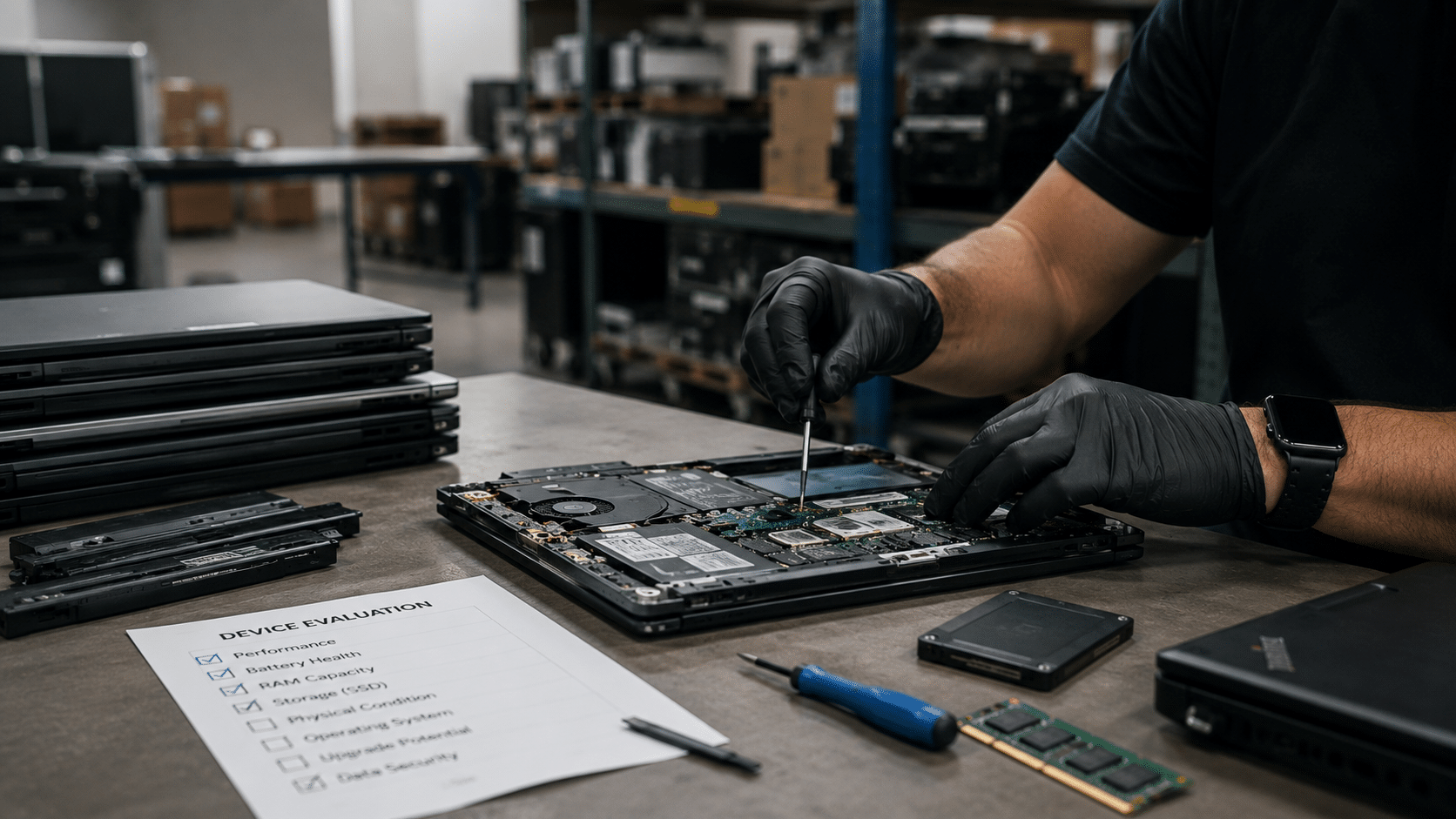
Once the equipment arrives at our Tampa facility, we conduct a full audit of all devices. Anything that stores data goes through a certified destruction process that meets HIPAA and NIST 800-88 standards used in U.S. healthcare and financial institutions (NIST.gov).
Nothing is “partially wiped.” Every hard drive receives a digital certificate of destruction — so you know exactly what was done and when.

4. Sorting and refurbishment

Not everything gets destroyed. A significant portion of the equipment can be repaired and reused. Our technicians clean, test, and refurbish those devices, preparing them for community programs that donate computers to children and families without access to technology.
As of 2025, we’ve delivered over 3,000 refurbished devices, reaching schools and communities both locally and abroad.

5. Responsible recycling

For items that can’t be repaired, our team dismantles them piece by piece. Each component — metals, cables, plastics, and screens — is sent to certified recyclers within the U.S., ensuring that materials re-enter the production cycle correctly and safely, avoiding illegal exports or environmental contamination (EPA, 2024).

6. Final report and certification

At the end of the process, your company receives a complete report including:

  • Certificates of data destruction

  • Material recovery summary

  • Estimated environmental footprint savings

This report helps you meet compliance requirements while demonstrating a genuine commitment to sustainability.

Recycling your technology with us isn’t just a task — it’s a practical way to protect the environment, keep your data safe, and create social value.
And it all starts with one click: schedule your pickup today.


Join the E-Revolution

If you want to know more about the different programs, partners, and overall cool things happening in the eSmart world, share your email with us, and Join the E-Revolution.

Request your 
Pickup

Or call us: 813-501-7768